
 By
By 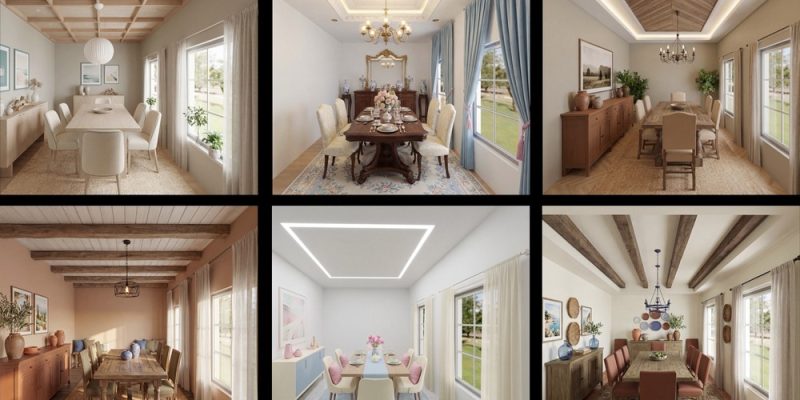
What Is the 70/30 Rule?
At its core, the 70/30 rule in interior design says that roughly 70% of a room should be defined by one dominant style, color palette, or material language, while the remaining 30% introduces complementary or contrasting accents. The 70% is your anchor: walls, flooring, main furniture pieces, and overall mood. The 30% is your personality layer: accent colors, textures, lighting, artwork, and décor that break monotony without causing chaos.
Some designers also use a functional spin in homes: 70% of space optimized for essential everyday use, 30% reserved for decorative elements that make the home feel personal. In practice, both interpretations overlap, the principle is about balance between what must work and what makes it feel like “you.”
Why It Matters in Real Homes
Residential interiors are deeply emotional. Research shows homeowners report higher satisfaction and stronger connection to their homes after targeted design interventions, especially when they can express individuality within a coherent framework. The 70/30 rule provides that framework: enough order that the space feels calm, enough contrast that it feels alive. In multi-functional homes, this proportion reconciles competing needs by keeping the core layout ruthlessly functional (70%) while the remaining layer (30%) handles color, story, and personality.
The 70/30 Rule, Reimagined Through AI
Historically, applying the 70/30 rule has been intuition-heavy: sketches, mood boards, CAD models, and hours of client back-and-forth. Generative AI is reshaping this by turning raw spatial data into intelligent visual proposals in seconds, making it trivial to explore multiple 70/30 combinations rather than defending a single option. The shift is less about replacing taste and more about removing friction: AI handles the heavy lifting of visualization so designers can stay in “editor mode.”
Foursite: From Floor Plans to Decisions
Foursite by VirtualSpaces is built precisely for this new workflow: upload 2D floor plans or blueprints, convert floor plan to 3D, and generate interior design 3D visualization and photoreal interior design renders in minutes, without traditional CAD or 3D skills. Foursite automatically parses 2D floor plans and blueprints, reconstructs walls, doors, and windows, and builds a navigable 3D shell you can instantly style. Designers can then use AI interior design, AI interior décor, and AI virtual staging workflows to test multiple 70/30 scenarios directly inside the same 3D visualization environment.
Seeing the 70/30 Rule, Not Guessing It
The hardest part of the 70/30 rule for most homeowners isn’t the definition, it’s imagining how that proportion will actually feel in a real room. Foursite’s 2D to 3D pipeline becomes a cognitive shortcut here: designers walk clients through live, fully styled examples at every 70/30 variation. Each is expressed as AI 3D visualization and interior design photoreal renders, so both designer and client can judge whether the proportions feel right and choose with confidence, rather than guessing from a mood board.
Foursite generates aesthetically designed Dining Room options from just a floor plan
AI as Creative Amplifier, Not Creative Director
A common fear is that AI interior design tools will flatten taste. The evidence points the other way: generative AI is best when directed by a human point of view and used to multiply options, not to pick the final answer. The designer still defines the core 70% intent, style direction, material families, light levels, and uses AI to rapidly produce, compare, and discard 30% accent strategies. Instead of spending hours pushing geometry across multiple apps, they stay in one environment and iterate on questions like: What if the 70% stays minimalist, but the 30% uses dramatic lighting rather than bold color? What does the 70/30 rule look like if we shift from Japandi to Mid-Century as the dominant style, keeping the same floor plans?
Faster Turnarounds and Higher Design Revenue
Because Foursite starts from 2D floor plans and goes blueprint to 3D in a single pipeline, interior designers no longer need a chain of separate tools: CAD for walls, another app for materials, a renderer for images, and an external freelancer for final compositing. That consolidation means faster project turnarounds, higher effective hourly rates (designers handle more residential projects in parallel), and lower outsourcing costs (many studios can bring 3D visualization fully in-house). For small or mid-sized studios, revenue scales more with creative judgment than with headcount devoted purely to production.
Why This Matters at Platform Scale
“What is the 70/30 rule in interior design?” is ultimately an ideal test case for what happens when spatial computing and generative AI meet residential real estate. Foursite sits at that junction, turning ubiquitous 2D floor plans and blueprints into high-fidelity AI 3D visualization and AI virtual staging that drive design quality and commercial outcomes alike. The best tools keep 70% of workflows familiar and trustworthy, while using the remaining 30% to unlock speed, clarity, and scale.




Comments