
 By
By 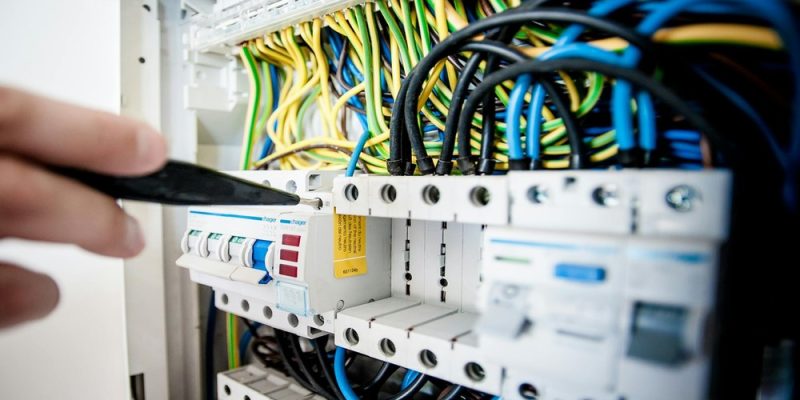
Introduction
The electrical system running through a modern home is, in many respects, the building’s nervous system. It carries energy to every room, powers every appliance, and underpins virtually every aspect of comfortable contemporary living. Yet for most homeowners, it remains almost entirely invisible – a hidden network of cables, terminations, and protective devices concealed behind plasterwork, beneath floorboards, and inside metal and plastic enclosures that rarely attract a second glance.
That invisibility is, in one sense, a mark of good installation. A well-designed, correctly installed domestic electrical system simply works – quietly, reliably, and safely – for decades without demanding attention. But it is also a characteristic that can breed complacency. Because the components of a household electrical system are largely out of sight, their quality, condition, and correct installation are matters that homeowners and installers sometimes underestimate.
The consequences of getting it wrong range from nuisance tripping of protective devices at one end of the spectrum to electrical fires and electrocution at the other. The UK’s electrical installation standard, BS 7671 – commonly known as the IET Wiring Regulations or the “18th Edition” – exists precisely because the stakes of poor electrical installation are so high. Understanding the components that make up a domestic electrical system, why they are specified as they are, and why quality and correct installation matter so profoundly is genuinely important knowledge for anyone building, renovating, or maintaining a home.
The Consumer Unit: Heart of the Domestic System
What It Is and What It Does
The consumer unit – colloquially known as the fuse box, though modern units contain no fuses in the traditional sense – is the central distribution and protection hub of the domestic electrical installation. It is where the incoming supply from the Distribution Network Operator (DNO) is received, metered, and then divided into individual circuits that run throughout the property. It is also where the critical protective devices that safeguard both the installation and its occupants are housed.
Modern domestic consumer units contain several distinct components working in concert. The main switch is a double-pole isolator that disconnects both the live and neutral conductors of the entire installation simultaneously, allowing the system to be made safe for maintenance or in an emergency. Individual circuit breakers protect each outgoing circuit from overcurrent – the excessive current that flows in the event of a short circuit or overload, which, if uninterrupted, would generate dangerous levels of heat in the circuit’s wiring. Residual Current Devices (RCDs) provide a fundamentally different and complementary form of protection, detecting imbalances between the current flowing in the live and neutral conductors – an imbalance that indicates current is taking an unintended path, potentially through a person – and disconnecting the circuit within milliseconds.
Split-Load Consumer Units and RCBO Configurations
The standard configuration in contemporary UK domestic installations is the split-load consumer unit, in which the outgoing circuits are divided between two RCD-protected groups. This arrangement ensures that if one RCD trips – due to a fault on one of its protected circuits – only half the circuits in the property are de-energised, rather than all of them. A kitchen appliance fault will not, therefore, simultaneously extinguish every light in the house.
An increasingly favoured alternative, particularly in new builds and premium installations, is the all-RCBO configuration. An RCBO (Residual Current Breaker with Overcurrent protection) is a single device that combines the functions of both a circuit breaker and an individual RCD in one unit. Fitting an RCBO to each circuit means every circuit has fully independent overcurrent and residual current protection – a fault on any one circuit affects only that circuit, with no impact on any other. This is the most resilient configuration available for domestic installations and is strongly favoured by quality-conscious electricians despite its higher component cost.
Arc Fault Detection Devices (AFDDs)
The 18th Edition of BS 7671, updated in 2022, introduced recommendations (and in certain circumstances requirements) for Arc Fault Detection Devices. AFDDs detect the electrical signatures of arc faults – dangerous, high-energy electrical discharges that can occur within damaged or deteriorated wiring and that represent a leading cause of electrical fires. Unlike conventional circuit breakers, which only respond to sustained overcurrent, an AFDD can detect the intermittent, high-frequency arcing that precedes many wiring fires and disconnect the circuit before ignition occurs. Their adoption in domestic installations is growing, and they represent the current frontier of domestic electrical protection technology.
Quality Matters Enormously Here
The consumer unit is the component in a domestic electrical system where quality is most consequential. A poorly manufactured or incorrectly specified consumer unit – or one whose protective devices fail to operate within specification – undermines the entire protection philosophy of the installation.
Hager is one of the most respected names among UK professional electricians for consumer units and distribution equipment. Their Hager Invicta range is widely regarded as a benchmark for quality in the domestic market, with robust construction, reliable protective devices, and clean internal layouts that facilitate neat, compliant cable management. Schneider Electric’s Acti9 range is another product family with a strong professional following, offering a comprehensive range of MCBs, RCDs, and RCBOs with consistently high build quality. Wylex has a long heritage in UK domestic installations and remains widely used, while Niglon – a British manufacturer with a strong presence in the UK trade market – produces a well-regarded range of consumer units and accessories that are widely stocked by electrical wholesalers and trusted by professional installers for their solid build quality and competitive value. ABB – a global electrical engineering group – produces highly regarded protective devices used in both domestic and commercial installations.
Circuit Protective Devices: MCBs, RCDs, and RCBOs
Miniature Circuit Breakers (MCBs)
The Miniature Circuit Breaker is the modern replacement for the rewirable fuse. Unlike a fuse, which must be replaced or rewired after operation, an MCB resets by simply flipping its toggle back to the on position once the fault condition has been resolved.
MCBs are rated by their current-carrying capacity (typically 6A, 10A, 16A, 20A, 32A, or 40A for domestic circuits) and their tripping characteristic, which defines the relationship between overcurrent magnitude and the speed of disconnection. Type B MCBs – the standard for most domestic lighting and socket circuits – trip relatively quickly at moderate overcurrents of 3-5 times their rated current, making them well-suited to circuits where the connected loads are predictable and resistive. Type C MCBs tolerate higher inrush currents before tripping and are used on circuits supplying motors and certain types of electronic equipment.
Residual Current Devices (RCDs)
The Residual Current Device is, arguably, the single most important safety innovation in domestic electrical installation history. An RCD continuously monitors the difference between the current flowing out through the live conductor and the current returning through the neutral. In a healthy circuit, these are equal. When current leaks to earth – whether through a fault in an appliance, damaged wiring insulation, or through a person who has contacted a live conductor – a difference (a residual current) appears. Modern domestic RCDs operate at a sensitivity of 30mA and disconnect the circuit within 40 milliseconds at that threshold, a combination that is below the level and duration at which cardiac fibrillation is typically induced in a healthy adult.
The UK’s electrical regulations now require RCD protection for virtually all circuits in a domestic installation, including socket circuits and lighting circuits. An installation without adequate RCD coverage is not only non-compliant but genuinely dangerous.
Wiring and Cable: The System’s Circulatory Network
Twin and Earth Cable
The workhorse of domestic electrical wiring in the UK is flat twin and earth cable – properly designated as 6242Y – consisting of two insulated conductors (live and neutral, in brown and blue insulation respectively) and an uninsulated earth conductor, all within a grey outer sheath. This cable is used for virtually all domestic lighting and power circuits and is available in a range of conductor cross-sectional areas.
The conductor size dictates the cable’s current-carrying capacity. 1.0mm² twin and earth is typically used for lighting circuits. 1.5mm² is used for higher-load lighting circuits and some signal/control wiring. 2.5mm² is the standard for ring main socket circuits and radial circuits supplying socket outlets. 4.0mm² and 6.0mm² cables are used for circuits supplying higher-demand fixed appliances such as electric showers, cookers, and heat pumps.
These conductor sizes are not arbitrary. They are calculated to ensure that, under maximum expected load conditions, the temperature rise in the conductor remains within safe limits, and that in the event of a fault, sufficient current flows to operate the protective device within the disconnection times required by BS 7671.
Armoured Cable and Specialist Wiring
For wiring runs that pass outside the protected envelope of a building – underground to an outbuilding, through an exposed external route, or in locations subject to mechanical damage – Steel Wire Armoured (SWA) cable is used. The steel wire armour provides mechanical protection while the cable’s construction maintains electrical performance and safety in demanding environments.
Heat-resistant cable is required in high-temperature locations such as luminaire connections in light fittings, sauna rooms, and proximity to heat sources. For bathroom and kitchen installations, the selection of appropriately rated cable and fittings is essential.
Cable Quality
Not all cables sold in the UK market are of equal quality, and this is a matter of genuine safety concern. Non-compliant cable – often imported from manufacturers who reduce material costs by under-specifying conductor cross-sections or using substandard insulation compound – has been identified as present in the UK market and has been linked to installation failures and fires. Professional electricians consistently specify cable from established British manufacturers. Prysmian (formerly Draka) is the UK’s largest cable manufacturer and produces the benchmark product for domestic twin and earth wiring, trusted by electricians across the country for its consistent quality, accurate conductor sizing, and compliant insulation. Nexans is another established European manufacturer with a strong UK presence, producing high-quality wiring cables used extensively in professional domestic and commercial installations.
Sockets and Socket Outlets
The 13-amp switched socket outlet is the defining feature of UK domestic electrical infrastructure and one of the safest socket designs in the world. The BS 1363 standard that governs UK socket outlets has several features designed to prevent electric shock and unsafe use – among them the requirement for shuttered live and neutral apertures that only open when the earth pin (the longest of the three) is inserted simultaneously. This shutter mechanism prevents a child (or adult) from inserting a conductor into a live aperture.
Single, Double, and Switched Fused Connection Units
Domestic socket outlets are available in single (one outlet) and double (two outlets) configurations, with the double socket being by far the most common choice in modern installations. Switched sockets incorporate an integral switch that allows the outlet to be isolated without unplugging the connected appliance – useful for appliances left in standby and for compliance with certain commercial electrical regulations, though in purely domestic installations the practical difference is modest.
Switched Fused Connection Units (SFCUs) – sometimes called fused spurs – incorporate an integral cartridge fuse and provide a permanent, direct connection point for fixed appliances such as extractor fans, towel rails, and under-counter appliances that are intended to remain connected without a plug-and-socket arrangement. The integral fuse protects the flexible cord between the FCU and the appliance, which is typically lighter than the circuit cable and requires additional protection.
USB Sockets
The integration of USB charging ports directly into socket outlet faceplates has become enormously popular in domestic installations over the past decade, reflecting the near-universal use of USB-charged devices. Modern USB socket outlets incorporate Type-A and increasingly Type-C USB charging ports delivering sufficient current to charge tablets and smartphones quickly without requiring a separate plug-in adapter. These are particularly useful at bedside locations, home office desks, and kitchen worktop positions. The electronics within these products vary considerably in quality, however, and it is worth specifying products from established manufacturers rather than the cheapest available.
Brand Choices and Professional Preferences
MK Electric – now part of the Honeywell building technologies group but retaining its distinctive British identity – is perhaps the most widely recognised name in UK wiring accessories, trusted by electricians for several generations. Their Logic Plus and Edge ranges offer clean, professional aesthetics with robust mechanical quality and reliable terminations that accept conductors cleanly and hold them securely. MK’s longevity in the market means their products are found in millions of UK homes.
Crabtree is another long-established British brand with strong professional credentials, whose socket outlets, switches, and consumer units are found throughout domestic and light commercial installations and are particularly favoured for their mechanical robustness.
Schneider Electric’s Lisse and Exclusive ranges offer contemporary styling with the build quality expected of a major European electrical manufacturer. Legrand’s Arteor and Celiane ranges bring a Continental design sensibility to the UK wiring accessories market, popular in higher-end residential projects where design as well as function is a consideration.
For premium domestic installations – large custom homes, high-specification apartments, hospitality environments – brands such as Hamilton Litestat and Forbes & Lomax offer beautifully engineered wiring accessories in brushed metals, polished finishes, and bespoke colour palettes that combine genuine electrical quality with an aesthetic standard appropriate for architecturally designed interiors.
Switches and Lighting Controls
Standard Plate Switches
The one-gang, two-gang, and multi-gang plate switch is the fundamental lighting control device in domestic installations. Single-way switches control a light from one position; two-way switches – wired in pairs – allow a light to be controlled from two positions, the arrangement used on staircases and long hallways where a light needs to be operable at both ends. Intermediate switches allow control from three or more positions, used in larger rooms or on multi-flight staircases.
The quality of the switch mechanism – the positive feel of the rocker, the reliability of the contacts over many thousands of switching operations, and the security of the terminal connections – varies meaningfully between manufacturers. A light switch in a frequently used position may be operated ten or twenty times a day, accumulating tens of thousands of cycles over a decade. Cheap switches with poorly constructed contact mechanisms can develop intermittent connections, arcing, and ultimately failure well before quality products would show any sign of wear.
Dimmer Switches
Dimmer switches use electronic circuitry – typically TRIAC-based or MOSFET-based depending on the technology generation – to reduce the voltage delivered to a lamp, thereby reducing its output. As discussed in the context of LED lighting, the compatibility of dimmer switches with LED loads is a critical consideration in modern installations. Not all dimmers are designed for LED loads, and using an incompatible dimmer with LED lamps can cause flickering, buzzing, reduced dimming range, and premature failure of either the lamps or the dimmer itself.
Varilight is a UK manufacturer with a particularly strong reputation for dimmer switches compatible with LED lighting. Their V-Pro range is specifically engineered for LED dimming applications, offering smooth dimming performance across a wide range of LED lamp types and wattages, and is widely specified by electricians carrying out LED retrofit installations. Lutron – an American manufacturer with a strong UK presence – produces premium dimmer solutions including their Caséta and RadioRA systems, which offer wireless dimming control integrated with smart home platforms, and are favoured in high-end residential projects.
Smart Switches and Controls
The integration of smart home technology into domestic wiring accessories has accelerated considerably over the past five years. Smart switches – replacing conventional plate switches with Wi-Fi or Zigbee-connected equivalents – allow lighting to be controlled via smartphone apps, voice assistants, or automated schedules without requiring any change to the existing wiring infrastructure. Hager’s Coviva range, Schneider Electric’s Wiser platform, and products from Shelly and Aqara represent different points on the price-performance spectrum for smart switching solutions in domestic installations.
Electrical Enclosures and Back Boxes
Metal and Plastic Back Boxes
Every socket outlet, light switch, and wiring accessory is mounted onto a back box – a recessed enclosure fixed into the wall that houses the wiring connections and provides the physical support for the faceplate. Back boxes are available in both metal and plastic construction and in a range of depths to accommodate different quantities of wiring.
The depth of the back box is an important practical consideration. A 25mm deep box is adequate for simple switch wiring with modest cable quantities; a 35mm or 47mm deep box provides the additional space needed for USB socket electronics, dimmer switch components, or locations where multiple cables converge at a single accessory. Fitting an accessory into an undersized back box compresses the wiring excessively, potentially damaging cable insulation and making secure terminal connections difficult – a common source of problems in installations where incorrect depths have been specified.
Metal back boxes, typically fabricated from galvanised steel, are preferred in solid wall installations where the box is fixed directly into masonry. Plastic back boxes are common in stud partition walls. The earthing of metal back boxes – via a short earth conductor connecting the box to the accessory’s earth terminal – is a requirement of BS 7671 and must not be omitted.
Trunking, Conduit, and Cable Management
Where cables cannot be concealed within wall construction – surface installations, extensions, or conversions where chasing cables into existing walls is impractical – cables are housed within protective enclosures. PVC mini-trunking is the standard solution for surface-run domestic wiring: a rectangular channel with a clip-on lid that contains the cables neatly and protects them from incidental mechanical damage. Produced by manufacturers including Marshall Tufflex and Thorsman, quality mini-trunking accepts cables cleanly, mitre cuts neatly at corners, and its lid clips retain their grip over years of use without cracking or yellowing.
Circular plastic conduit – and more robustly, steel conduit – is used in locations requiring greater mechanical protection. Steel conduit systems, while significantly more labour-intensive to install than trunking, provide the highest level of cable protection available in surface installations and are required in some commercial and industrial environments. In domestic work, steel conduit is sometimes used in garages, workshops, and outbuildings where cables may be subject to mechanical risk.
Junction Boxes and Cable Connectors
Wherever cables are joined or extended within an installation, the connection must be made within an accessible and appropriate enclosure. The screw-terminal junction box – a simple round or square plastic box containing a terminal block – is the traditional solution, installed within ceiling voids, under floors, or within walls at accessible positions. Modern Wago lever-lock connectors have largely displaced screw terminals in many applications, offering faster, more reliable connections that require no screwdriver and are significantly more tolerant of different conductor sizes. The lever mechanism of a Wago connector provides a clear, positive indication of a secure connection and can be opened and reclosed repeatedly without degrading the connection quality.
Wago – a German manufacturer whose name has become almost synonymous with modern electrical connectors among UK electricians – produces the 221 series Lever-Nuts that have become genuinely ubiquitous in domestic electrical installation work, respected for their reliability, compactness, and ease of use.
The Importance of Correct Installation
Cable Routes and Protection
The routing of cables within a domestic installation is governed by detailed requirements in BS 7671, reflecting the fact that cables concealed in walls and floors are vulnerable to damage from subsequent building work – DIY drilling, fixing of shelving, or kitchen fitting – that may not respect the presence of hidden wiring. Cables installed in walls must either be installed in defined safe zones (vertical or horizontal routes from accessories and at ceiling level) or be protected by earthed metal conduit or by a mechanical protection device such as a steel capping strip. A cable run diagonally across a wall or in an unpredictable position is not merely non-compliant – it is a genuine long-term risk to anyone carrying out subsequent work on the property.
Correct Terminations
The quality of a cable termination – the physical connection between a conductor and a terminal – is one of the most important factors in the long-term reliability and safety of an electrical installation. A poorly terminated connection, whether insufficiently tightened, incorrectly made, or using a conductor with damaged or nicked strands, will develop resistance over time. Resistance generates heat; heat accelerates deterioration of insulation and terminal materials; deterioration increases resistance further. This self-reinforcing cycle is responsible for a significant proportion of electrical fires that originate within wiring accessories and enclosures.
Professional electricians use calibrated torque screwdrivers set to the terminal manufacturer’s specified torque values when terminating connections, ensuring consistent, correctly tightened connections throughout an installation. All excess conductor insulation should be removed to the correct depth – enough for the conductor to seat fully in the terminal, but not so much that bare copper protrudes beyond the terminal and risks contact with adjacent live parts.
Testing and Certification
A completed domestic electrical installation – whether a new build, a rewire, or a significant alteration – must be tested and certified before it is put into service. The range of tests required by BS 7671 includes insulation resistance testing (confirming that the insulation of circuit conductors is intact and not leaking current to earth), continuity testing (confirming that protective conductors are intact from every point in the installation back to the main earthing terminal), polarity verification (confirming that live and neutral conductors have not been transposed anywhere in the installation), and RCD operation testing (confirming that each RCD trips within the specified time at the required test current). The results of these tests are recorded on an Electrical Installation Certificate (EIC), which forms part of the property’s legal documentation and is required when selling a property, claiming on buildings insurance following an electrical incident, or demonstrating compliance with Building Regulations.
Part P and Notifiable Work
In England, domestic electrical installation work is governed by Part P of the Building Regulations, which requires that notifiable electrical work – consumer unit replacements, new circuits, and work in bathrooms and kitchens – is either carried out by a registered competent person (a qualified electrician registered with a scheme such as NICEIC or NAPIT) or is notified to and inspected by the local building control authority. The purpose of Part P is to ensure that electrical work in homes reaches the standard required by BS 7671, and its existence reflects the fact that unsafe amateur electrical work represents a genuine and ongoing public safety risk.
The Case for Quality Components
It is worth addressing directly the temptation – understandable in the context of building or renovation costs – to economise on electrical components. Electrical materials represent a relatively modest proportion of the total cost of a domestic electrical installation; the majority of the cost lies in the labour of the qualified electricians carrying out the work. Specifying inferior components to save money on materials while the same skilled labour is being applied represents poor value, because the inferior products will be installed with the same effort and will occupy the same positions in the installation for the same expected service life.
Quality wiring accessories from established manufacturers such as MK, Crabtree, or Schneider offer terminals that accept conductors cleanly and hold them reliably, mechanisms that function consistently over many years of use, and materials that meet or exceed the flammability and thermal resistance requirements of the relevant standards. Quality cable from Prysmian or Nexans provides accurate conductor sizing, robust insulation, and compliance with every applicable standard. Quality protective devices from Hager, Schneider, or ABB operate within their specified parameters under fault conditions – which is, ultimately, the moment when their quality matters most.
The alternative – cheap components of uncertain provenance and inconsistent quality – may appear to offer savings at the point of purchase that look entirely different when a socket outlet develops a hot spot behind the faceplate, when a circuit breaker fails to clear a fault within the specified time, or when a cable’s actual conductor cross-section turns out to be smaller than its marked rating suggests.
Conclusion
The household electrical system is a precisely engineered collection of interdependent components, each selected and installed according to detailed technical standards developed over many decades of hard-won experience. The consumer unit, its protective devices, the cables running through the building fabric, the sockets and switches serving every room, the enclosures containing every termination – each plays a defined role in a system designed to deliver electrical energy safely and reliably throughout the property’s life.
Understanding that system – knowing what its components are, why they are specified as they are, and why quality and correct installation are not optional extras but fundamental requirements – is valuable knowledge for any homeowner. It informs better decisions when commissioning electrical work, better conversations with qualified electricians, and a healthier scepticism toward the corner-cutting that, in domestic electrical installation, carries consequences that no subsequent redecoration can conceal.






Comments