
 By
By 
A property does not exist only within its boundary wall. Streets, MRT stations, parks, healthcare, schools and public spaces shape how convenient a neighbourhood feels and how easily residents move through it. When those systems improve, homeowners can benefit even if nothing inside their unit changes.
Still, infrastructure should be evaluated carefully. Announced plans may take years to complete, construction can create temporary inconvenience, and not every upgrade affects every household in the same way. Buyers gain more from understanding the practical impact than from simply counting future projects on a map.
Transport upgrades change daily time costs
A new connection or improved interchange can reduce the number of transfers needed for work, school or appointments. Even a ten-minute saving each way adds up across a week, especially for households with several people commuting in different directions.
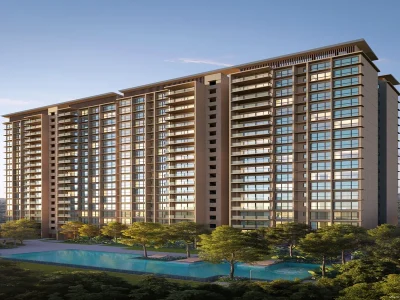
Buyers considering Clovelle of Woodlands can look at Woodlands as part of a wider northern transport and employment network. Existing MRT access should carry more weight than speculative future benefits, while confirmed upgrades can be treated as additional support rather than the sole reason for purchasing.
Public spaces affect how a neighbourhood feels
Better parks, paths, community facilities and streetscapes can make an area easier to use without spending money. Families may walk more, older residents may have more comfortable routes and children may gain recreational options close to home.
These improvements also change the experience outside private facilities. A condominium may have its own gym and pool, but residents still rely on the wider neighbourhood for daily errands, exercise and social life. Good public infrastructure expands the useful living environment beyond the site boundary.
Healthcare and everyday services add resilience
Nearby clinics, hospitals, supermarkets and childcare facilities can become more important as a household changes. A location that works for a young professional may need to support children or ageing parents later.
For households researching Dorset Gardens, the established city-fringe surroundings can be considered alongside the private development itself. Access to central healthcare, retail and transport may provide practical value that is less dependent on future promises than a completely new district still waiting for services to arrive.
Construction can create a temporary trade-off
Infrastructure upgrades are not free of disruption. Residents may be impacted during construction by road diversions, noise, dust and altered walking routes. Those individuals who live close to large projects ought to be aware of the timeframe and what they can endure.
This is particularly relevant for buyers planning to move in soon after completion. A future improvement may be positive over ten years but unpleasant for the first two. Property decisions become more realistic when both phases are included in the assessment.
Infrastructure can widen the future buyer pool
A neighbourhood that becomes easier to reach or gains useful public facilities may appeal to a broader range of future buyers and tenants. Improved accessibility can be particularly important for people who do not drive.
However, better infrastructure can also encourage new residential supply. There is potential for more redevelopment of houses around enhanced transport nodes, generating a degree of competition at resale or rental. While purchasing a property, it is best to take into account the demand and supply equilibrium instead of taking it for granted that each and every public investment equates to the property price.
Verify plans before pricing them into the purchase
Master plans and government announcements are useful research sources, but buyers should distinguish between completed infrastructure, funded projects and early proposals. The level of certainty is different in each case.
Use official agency information and note expected timelines. If a purchase only feels attractive because a distant plan is assumed to happen quickly, the investment case may be too speculative. Existing strengths should be able to support the decision on their own.
Local businesses often respond to better infrastructure
When transport and public spaces improve, retail and service businesses may become more willing to serve the area. New cafés, clinics, childcare centres or convenience services can gradually make daily life easier for residents.
That change is not guaranteed, and commercial turnover can be high. Still, infrastructure that increases footfall and accessibility can support a healthier neighbourhood ecosystem when residential demand is already present.
Conclusion
Community infrastructure can improve residential life by saving time, adding services and making neighbourhoods easier to move through. Those benefits are often more durable than short-lived design trends because they serve daily routines across many households.
The strongest buying decisions treat future upgrades as a bonus rather than a promise of automatic appreciation. Start with what exists, verify what is coming and consider the construction period as well as the finished result. That produces a more grounded view of how neighbourhood change may affect ownership.










Comments