
 By
By 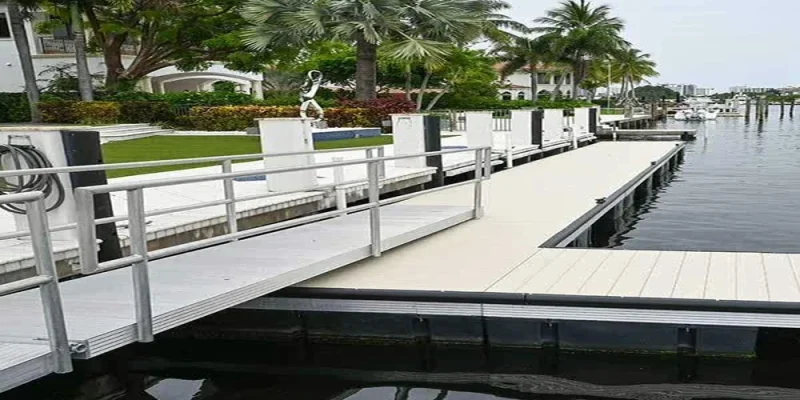
A common boating quiz question asks which of the following is recommended when docking your boat. The answer on most tests is to approach slowly and be ready with lines and fenders. Those habits sit at the top of most lists of boat docking best practices, and the reasons behind them come down to how a boat moves near a dock.
A boat has no brakes. It slows down either by shifting into neutral, which lets water drag stop the hull, or by shifting into reverse, and both take time and distance. At idle speed a small boat can stop in a few feet, but at higher speed the same boat needs much more room, and wind or current has more time to push it off course.
Lines and fenders need to be set before the approach begins. Each dock line is tied to a cleat on the boat with the free end coiled and ready. Fenders hang along the side that will face the dock, at the height where the hull meets the dock edge.
Each person on board has a job, with one person handling the bow line and another handling the stern line, while passengers who are not helping stay seated. Hands and feet stay inside the rail, because a hull drifting into a dock can pinch anything caught between them.
Once the boat is tied up, spring lines keep it from moving forward or back. On a fixed pier, all the lines need extra slack to allow for the tide, but on a floating dock the dock rises and falls with the boat, so the lines can stay snug.
The cleats and hardware on the dock absorb a lot of force over time, so loose bolts, cracked cleats and worn dock lines are the main things worth checking each month.
Supreme Floating Docks is a veteran-owned dock builder in Fort Lauderdale that designs residential and commercial floating docks. Its layouts take boat size, local water conditions and the way the owner actually uses the dock into account.












Comments